

Best Boxing Gloves for Small Hands: 2026 Guide

Table of Contents
Why Hand Size Matters in Boxing Glove Selection
How to Measure Your Hand for Boxing Gloves
Understanding Boxing Glove Size Chart and Ounce Weight
How Boxing Gloves Should Fit on Small Hands
Best 12 oz Boxing Gloves for Compact Hands
Top Boxing Gloves for Small Hands: Training and Sparring Options
Boxing Hand Wraps for Small Hands: Fit Testing and Comfort
Training vs. Sparring Gloves: Which Weight Works Best
Frequently Asked Questions
Last Updated: October 15, 2026
Why Hand Size Matters in Boxing Glove Selection
Finding the right boxing gloves for small hands isn't just about comfort, it's about safety, technique, and training quality. Poorly fitted gloves leave your wrists unsupported and knuckles misaligned, risking injury.
Hand size determines how the compartment sits on your fingers and knuckles. A glove built for average or large hands bunches up on smaller ones, leaving padding gaps and letting your hand shift on impact, which throws off punch alignment and stresses your wrist. The best boxing gloves for small hands have a narrower compartment, snug wrist closure, and padding positioned for compact fists.
Weight matters too: smaller hands tire faster at the same ounce weight because force concentrates in a smaller area, so a 16-ounce glove balanced on a large hand may feel heavy on a small one. Measuring your hand takes the guesswork out of sizing.
How to Measure Your Hand for Boxing Gloves
The most reliable way to find gloves that fit is to measure your hand directly and match the numbers against size charts.

Start by measuring your hand circumference. Wrap a soft measuring tape around your knuckles at their widest point, just behind your knuckle joints, not across your palm. Write down this measurement in inches.
Next, measure hand length from middle fingertip to wrist crease. This reveals whether your hand is proportionally small or has a smaller circumference but longer fingers; both measurements together clarify your hand shape.
Compare both measurements to the manufacturer's size chart. Most reputable brands publish hand compartment width and depth alongside ounce weight; if a brand doesn't, that's a red flag they haven't optimized for fit variations.
A common mistake is relying only on ounce weight. Two 12-ounce gloves from different brands can feel completely different because compartment dimensions vary, one may pack more knuckle padding, another more wrist support.
Understanding Boxing Glove Size Chart and Ounce Weight
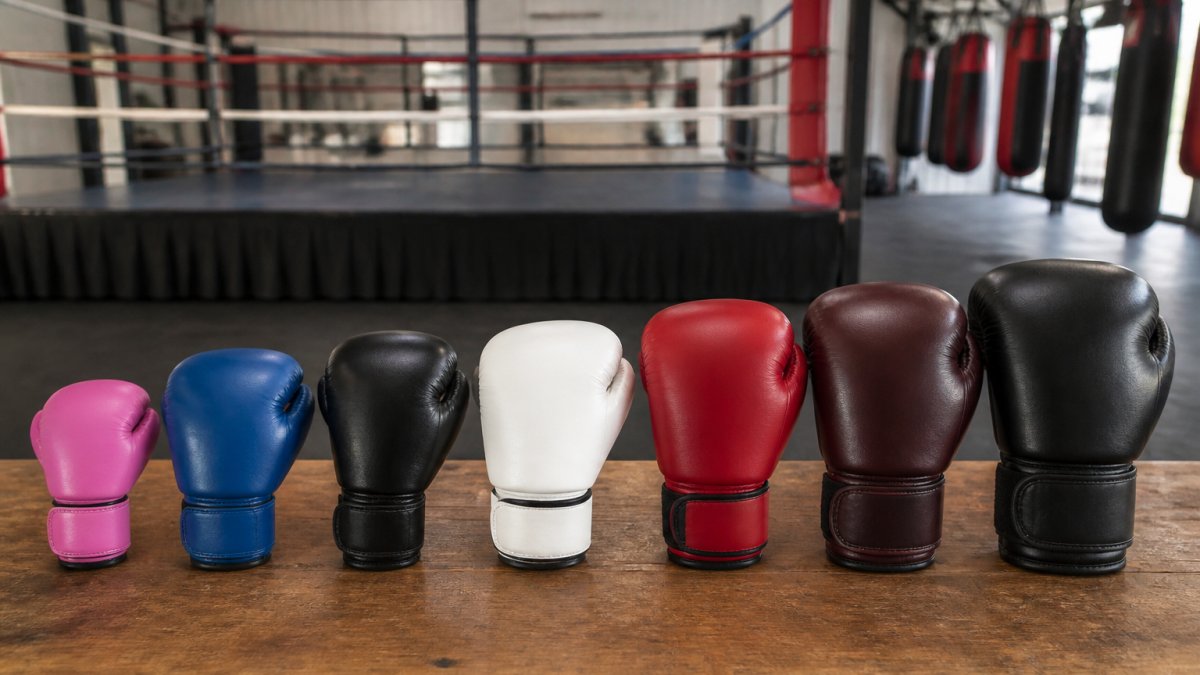
Boxing glove weight is measured in ounces and correlates to padding thickness and glove size. Standard sizes are 8, 10, 12, 14, and 16 ounces, with some brands offering 6, 7.5, or 18.
For small hands, the ounce-to-size relationship is critical. A 16-ounce glove that pads a large hand adequately feels oversized on a small one because padding spreads across more surface area.
The size chart should list hand circumference ranges per ounce weight. For example, a brand might specify their 12-ounce gloves fit 6.5 to 7-inch hands, far more useful than ounce weight alone. If your hand measures 7 inches around, that brand's 12-ounce glove should fit better than their 16-ounce option.
Wrist closure type affects fit too. Hook-and-loop closures adjust quickly and are easy to put on and remove; lace-ups offer more customized support but take longer to secure. For small hands, a hook-and-loop closure that tightens snugly around a smaller wrist is often preferable because it prevents shifting during impact.
How Boxing Gloves Should Fit on Small Hands
The correct fit for boxing gloves on small hands follows three principles: fingers shouldn't touch the end of the compartment, knuckles should sit centered in the padding, and your wrist should feel supported but not restricted.
Your fingers should have about a half-inch of space at the tips, allowing for natural swelling during training without compression. If your fingertips touch the glove material, the fit is too tight and will cause discomfort and reduced circulation in longer sessions.
Your knuckles should align with the thickest padding. Press your fist gently into the palm area; you should feel substantial padding beneath your knuckles.
The wrist closure should be snug enough to stop the glove rotating during punches but not so tight it restricts blood flow, you should fit one finger between closure and wrist.
Test the fit with hand wraps on, many boxers skip this and discover problems mid-training. Wrap your hands with a standard technique, then put the gloves on: they should feel snug without being painfully tight. If uncomfortably tight over wraps, size up; if loose, size down.
Best 12 oz Boxing Gloves for Compact Hands
Twelve-ounce gloves are the sweet spot for many boxers with small hands: enough padding for safety, yet responsive and less tiring than heavier gloves. Top options:
Venum Elite Boxing Gloves, Straightforward Adjustment for Smaller Hands
The Venum Elite gloves earn their reputation for accessibility: easy to put on, adjust, and remove, a practical advantage for frequent trainers.
What doesn't: The supplied product information doesn't verify detailed construction specifics or warranty coverage, so you'll want to check the current product page for the latest details.
Pro Tip If you're transitioning from shadowboxing or bag work to sparring, the Venum Elite's responsive feel helps you maintain technique precision while building the confidence to spar safely.
Fairtex BGV1 and BGV19, Compact Fit with Durability
Fairtex is a trusted combat-sports name, and both the BGV1 and BGV19 appear in small-hands buying guides.
The BGV1 offers solid padding and a classic design. Boxers report sparring successfully in 16-ounce pairs, though smaller hands may prefer 10 or 12 ounces for extended training.
The BGV19 provides a more tailored fit for hands that are small but proportionally balanced.
What to watch: Current pricing and exact sizing specifications should be verified on the Fairtex website, as product lines and availability shift regularly.
Cleto Reyes Hook & Loop Training Gloves, Lightweight Options for Precision
Cleto Reyes is known for precision engineering, and their hook-and-loop training gloves come in 10 and 12 ounces, ideal for small hands wanting lighter gloves.
The hook-and-loop closure allows quick adjustments between rounds.
Watch Out Lighter gloves (10-12 oz) are excellent for technique and speed work but provide less padding for heavy bag work. If you're doing sustained heavy bag training, consider moving to 14 or 16 ounces to protect your hands long-term.
Top Boxing Gloves for Small Hands: Training and Sparring Options
The training-versus-sparring distinction matters more for small hands because lighter gloves feel more responsive but cushion less:
Training Gloves suit bag work, mitt work, and shadowboxing, prioritizing feel and feedback so you can sense punch accuracy and hand position. For small hands, 10 to 12-ounce training gloves reduce fatigue and preserve technique through longer sessions.
Sparring Gloves emphasize protection for both you and your partner, typically 14-16 ounces with more padding to absorb impact safely.
The Venum Elite and Fairtex BGV1 both work for training, though the Fairtex can handle sparring if you size up to 16 ounces.
For optimal training and safety, having at least two pairs of gloves, a lighter pair for technique and conditioning, and a heavier pair for sparring, allows you to train appropriately for each goal without compromising fit or safety.
RDX and Hawk Sports, Budget-Friendly Alternatives
If budget is your primary concern, RDX and Hawk Sports offer entry-level options for beginners.
RDX boxing training gloves are a Verywell Fit budget pick at a reported $38 at major retailers.
Hawk Sports gloves cost under $20 and are beginner-friendly with generally positive customer feedback. At this price they suit someone testing whether boxing is right for them, though don't expect the durability or fit precision of higher-end brands.
What matters: budget gloves often have looser compartments and less precise padding, meaning more shifting for small hands.
Boxing Hand Wraps for Small Hands: Fit Testing and Comfort
Hand wraps are non-negotiable for fit testing and hand protection. They add bulk, so testing gloves over wrapped hands reveals how they'll actually feel in training.
Standard hand wraps are typically 180 inches long and 2 inches wide, often excessive for small hands, leaving material left over. Consider shorter wraps (120-150 inches) designed for youth or smaller hands; these prevent over-wrapping, which restricts circulation and worsens glove fit.
Wrap technique matters too. A proper wrap protects knuckles, stabilizes the wrist, and distributes pressure evenly. Wrap too tightly and your hand swells; too loosely and your wrist lacks support. For small hands, aim for secure support without constriction.
When testing fit, wrap your hands first, then put the gloves on and throw a few light punches. Your fingers should move slightly and your knuckles should feel centered in the padding. If the glove feels loose or your hand shifts inside, size down or try another brand.
Key Takeaway The best glove fit is only truly verified through training. Buy from a retailer with a return policy, test the gloves over wrapped hands during at least one training session, and make your final decision based on how they perform, not just how they look.
Training vs. Sparring Gloves: Which Weight Works Best
Your weight choice depends on training goal and hand size:
For technique and conditioning work, smaller hands benefit from 10 to 12-ounce gloves. The reduced weight lets you maintain speed and precision through longer sessions, and your shoulders and forearms fatigue less, so you focus on form rather than fighting the glove.
For heavy bag training, 12 to 14-ounce gloves protect better without being excessive, absorbing impact more effectively than lighter gloves. If your hand measures under 7 inches around, 12 ounces offers adequate protection; larger small hands may prefer 14.
For sparring, 14 to 16-ounce gloves are standard, even for small hands, because the extra padding protects both you and your partner. Sparring with 12-ounce gloves puts unnecessary risk on both boxers, so follow your gym's minimum weight requirements regardless of hand size.
For mitt work with a coach, 10 to 12-ounce gloves work well: light enough for your coach to see your technique, with enough protection for extended combinations.
The key insight: don't compromise on sparring glove weight to accommodate small hands. Instead, find a 14 or 16-ounce glove with a compartment sized for small hands, as Fairtex and Venum offer.
Finding the best boxing gloves for small hands requires measuring your hand, understanding how ounce weight translates to actual glove size, and testing fit over hand wraps. The Venum Elite and Fairtex models offer proven options across price points and use cases.
Frequently Asked Questions
What size boxing gloves should a beginner with small hands get?
Beginners with small hands typically benefit from 10 oz to 12 oz boxing gloves, which provide adequate wrist support while accommodating a more compact hand compartment. The specific choice depends on your hand circumference and the intended use, training bags require lighter gloves, while sparring demands more protection. Measure your hand circumference first, then try gloves on with hand wraps to ensure a snug fit around the knuckles and palm without excess padding bunching.
How should boxing gloves fit on small hands?
Boxing gloves should fit snugly around your knuckles and palm with your hand wraps on. Your fingers should sit comfortably in the finger compartment without excess space, and your thumb should be positioned securely without pinching. The wrist closure should wrap firmly around your wrist without cutting off circulation. When you make a fist, the padding should compress slightly but not shift. Test the fit by shadowboxing and hitting a heavy bag to ensure the glove stays in place during movement.
Are 12 oz boxing gloves too small for training?
12 oz boxing gloves are appropriate for training, particularly bag work and mitt work, if you have small hands. They offer adequate wrist support and knuckle protection while allowing better hand speed and control. For sparring, 12 oz gloves may be acceptable depending on your gym's rules and your opponent's size, though some facilities require 14 oz or 16 oz for safety. Always confirm your gym's requirements.
Do hand wraps affect boxing glove fit for small hands?
Yes, hand wraps significantly impact glove fit. Wraps add bulk around your knuckles and palm, so you must always try gloves on while wearing wraps to test the actual fit. Without wraps, a glove may feel comfortable but become too tight once wrapped. For small hands, use thinner hand wraps or wrap more loosely to avoid over-compression inside the glove. The final fit should allow your fist to sit centered in the glove with wraps on, with no bunching or excessive pressure points.
What are the smallest size boxing gloves available?
The smallest boxing gloves typically start at 6 oz, though these are rarely used outside of children's training. For adults and youth with small hands, 10 oz and 12 oz are the most practical compact options. Glove manufacturers like Fairtex, Venum, and Cleto Reyes offer 10 oz and 12 oz sizes specifically designed for smaller hand compartments. Check the hand compartment width and finger box depth in product descriptions, not just the ounce weight, to ensure the glove matches your hand dimensions.
START TRAINING TODAY

Comments