

How to Tell If Boxing Gloves Fit Correctly

Table of Contents
Why Proper Boxing Glove Fit Matters
Understanding Boxing Glove Ounces Guide
The Fit Check: Step-by-Step Instructions
The Five-Minute At-Home Fit Test
Step 1: Make a Fist and Test Hand Compartment Space
Step 2: Check Finger and Knuckle Positioning
Step 3: Verify Wrist Stability and Support
Step 4: Test Movement and Circulation
Troubleshooting a Failed Fit Check
Boxing Gloves Too Tight: Signs and Solutions
Boxing Gloves Too Loose: Identifying Poor Fit
Boxing Gloves With Hand Wraps: How Wraps Affect Fit
Testing Fit During Training and Break-In
Common Fit Mistakes to Avoid
Frequently Asked Questions
Last Updated: October 17, 2026
Why Proper Boxing Glove Fit Matters
A properly fitting boxing glove protects your hands, wrists, and knuckles during training and competition; how boxing gloves fit matters because poor fit leads to injury, reduced performance, and wasted money. A glove that's too tight or too loose compromises punching power, hand circulation, and wrist support. We've seen countless boxers struggle because they never learned to check their glove fit correctly. Getting this right takes five minutes and prevents months of pain.
Understanding Boxing Glove Ounces Guide
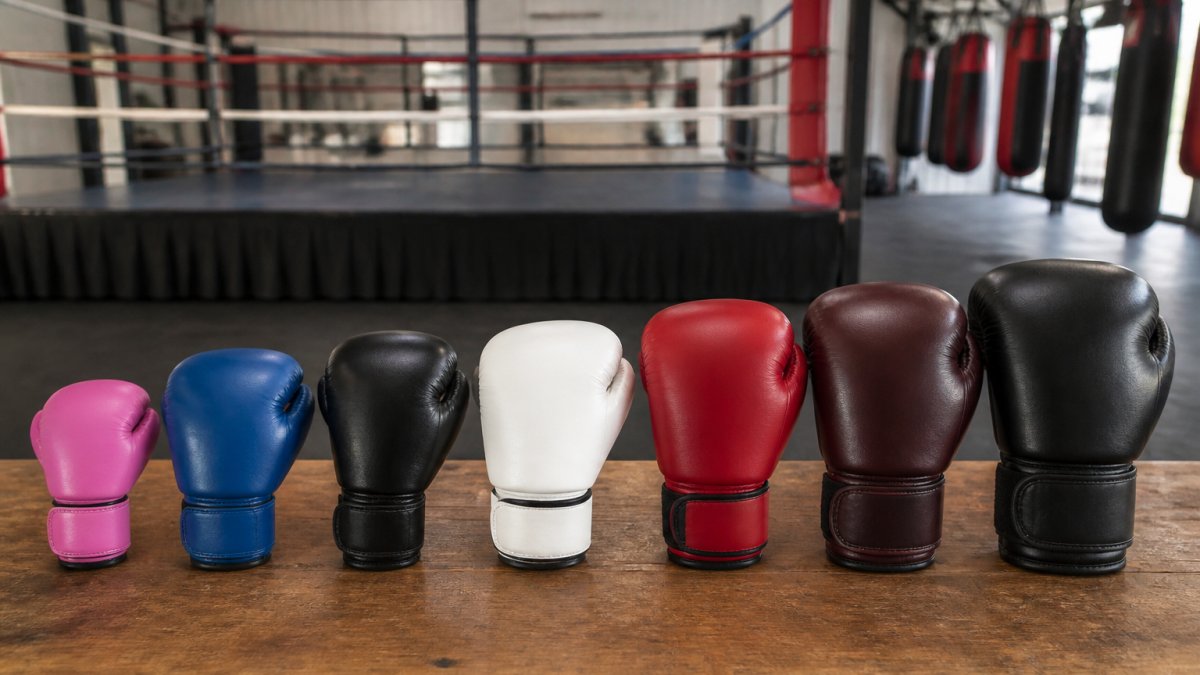
Boxing glove weight is measured in ounces (oz) and refers to the glove's total weight, largely determined by padding thickness. Common US sizes are 8, 10, 12, 14, and 16 oz.
A practical way to think about ounces:
8 oz and 10 oz, lighter padding, typically used for competition and speed work. Less material means less cushioning, so a poor fit is felt faster.
12 oz, a common all-around size for bag work, pad work, and general training.
14 oz and 16 oz, heavier padding, typically used for sparring and heavy bag work where more cushioning is wanted. The larger hand compartment and thicker padding can make a glove feel roomier even at the same nominal hand size.
16 oz and up, often used by larger boxers or for high-volume heavy bag sessions.
Two gloves labeled 16 oz can feel completely different: one brand may build a tighter hand compartment with denser foam, another a wider compartment with softer foam. Use ounces to match the glove to your training use, then use the fit checks below to confirm the hand compartment, knuckle placement, and wrist closure work for your hand.
Pro Tip When you try on gloves, test the ounce weight you actually plan to train in. A 16 oz sparring glove and an 8 oz competition glove can fit differently on the same hand, so a try-on in the wrong weight tells you very little.
Ounces also interact with hand wraps. A heavier glove has more internal padding, which can absorb some wrap bulk but can also mask a glove that is genuinely too small. If a 16 oz glove feels tight with your normal wraps, check the hand compartment and knuckle position first, then adjust ounce weight only after confirming the size is right.
The Fit Check: Step-by-Step Instructions
How to tell if boxing gloves fit correctly comes down to a short, repeatable test you can run at home with your hand wraps on. Do the whole sequence in one sitting, in the gloves you actually plan to train in, and repeat it after the first few sessions as the gloves break in.

The Five-Minute At-Home Fit Test
Put on your hand wraps as you will for training, slide into the gloves, and fasten the closure. Run these four movements in order:
Make a firm fist. Your fingers should curl into the hand compartment and your knuckles should settle into the padded striking area. You want roughly a half-inch of space between your fingertips and the end of the compartment, enough to close the fist without jamming, not so much that your hand slides.
Open the hand fully. Spread and extend your fingers. If the glove fights you or pinches at the finger joints, the compartment is too small. If your hand opens with no contact against the interior, the glove is likely too large.
Move the wrist through its range. Flex forward, extend back, and rotate side to side. The closure should hold the wrist firmly without digging in, and the glove should not slide up your forearm.
Shadowbox for 30 to 60 seconds. Throw light jabs, crosses, and hooks at air. Watch for the glove rotating on your wrist, your hand sliding forward inside the glove, or pressure points that appear only once you start moving.
If all four movements pass, the glove is a reasonable fit. If any one fails, use the troubleshooting notes below before deciding the glove is the wrong size.
Step 1: Make a Fist and Test Hand Compartment Space
Make a tight fist inside the glove. Your fingers should reach the end of the hand compartment without jamming, with roughly a half-inch of space between your fingertips and the glove's interior. If your fingers touch the end with no cushion, the glove is too small; more than an inch of dead space means it's too large. Press gently near your fingertips, you should feel slight resistance but no sharp pain.
Step 2: Check Finger and Knuckle Positioning
Your knuckles should sit centered in the glove's padded area and stay stable when you rotate your hand, if they shift or rotate inside the glove, the fit is too loose. Wiggle your fingers individually; each should move freely without binding or cramping. Pinching at the finger joints means the glove is too tight.
Step 3: Verify Wrist Stability and Support
Proper wrist support prevents injury during punching. The closure, hook-and-loop strap, laces, or elastic, should hold your wrist firmly without cutting off circulation. Flex your wrist forward and backward: it should feel supported but not restricted, and you should make a full fist without the glove shifting. If the glove slides up your forearm when you punch, it's too loose; if the strap digs in or causes numbness, it's too tight.
Step 4: Test Movement and Circulation
Make a fist and punch the air gently, your hand should move freely without pressure points. Check circulation by making a fist for 10 seconds, then opening your hand; skin should return to normal color immediately. If fingers stay pale or tingly, the glove is restricting blood flow. Throw three or four light punches: the glove should feel like an extension of your arm, not a constraint.
Watch Out Stop using the glove and remove it immediately if you feel numbness, tingling, a pins-and-needles sensation, or fingers turning pale or blue. These are signs of restricted circulation or nerve pressure, not normal break-in tightness. If the symptoms return every time you wear the glove, exchange it for a different size or model rather than training through it.
Troubleshooting a Failed Fit Check
When a check fails, separate the cause before buying a new glove:
Tightness only at the wrist, hand feels fine, the closure is over-tightened or your wraps are too thick at the wrist. Loosen the strap and re-wrap with less bulk at the wrist.
Tightness across the knuckles and fingers, the hand compartment is too small. Try thinner wraps first; if the pinch remains, size up.
Hand slides forward or glove rotates on punches, the glove is too loose or the closure is not securing the wrist. Tighten the strap fully, add thicker wraps, and if the movement persists, size down.
Pressure points on the thumb or the back of the hand, this is often a shape mismatch rather than a size problem. Compare a lace-up versus hook-and-loop model and a different hand-compartment shape before changing size.
Comfortable standing still, painful when punching, the padding is not sitting where your knuckles land. Re-check knuckle centering; if it cannot be corrected, the glove's design does not match your hand.
Key Takeaway A correctly fitting glove passes all four movements with your wraps on: firm fist, full open hand, stable wrist, and no shifting during shadowboxing. If it fails one, fix the wrap or closure first, then the size, then the model, in that order.
Boxing Gloves Too Tight: Signs and Solutions
Tight boxing gloves cause hand pain, numbness, and reduced performance.
If your gloves are too tight, consider these options:
Loosen the closure strap. Most gloves have adjustable velcro straps, loosen slightly and retest. You want snug, not strangling.
Wrap your hands with thinner wraps. Switching from thick to thin wraps reduces internal pressure.
Size up to a larger glove. If loosening the strap doesn't help, move to the next size up.
Break in the glove gradually. New gloves are stiff.
Stop training immediately if you experience sharp pain or numbness that doesn't resolve when you remove the glove.
Boxing Gloves Too Loose: Identifying Poor Fit
Loose gloves shift during punching, reducing power and increasing injury risk.
If your gloves are too loose, try these fixes:
Tighten the closure strap completely. Pull the velcro strap as tight as comfortably possible, this is your first adjustment.
Add thicker hand wraps. Thicker wraps fill more internal space and reduce hand movement.
Size down to a smaller glove. If tightening and thicker wraps don't solve it, your glove is too large.
Check the glove construction. Some gloves fit looser by design.
Loose gloves waste training time and increase impact injury risk. Your hand needs to be secure for proper technique development.
Boxing Gloves With Hand Wraps: How Wraps Affect Fit
Hand wraps add significant bulk inside your glove, changing how snug the fit feels. Always test glove fit while wearing the same hand wraps you'll use during training, a glove that feels perfect without wraps becomes too tight once you add them. Wrap thickness varies by material and technique: thin wraps (inner hand only) add minimal bulk, medium wraps (full hand and wrist) moderate bulk, and thick wraps (multiple layers) significant bulk.
Testing Fit During Training and Break-In
New gloves feel different than broken-in ones: the padding is stiff and the glove feels tight initially. After 5-10 training sessions, the padding compresses and the fit becomes more comfortable.
During training, watch for your hand sliding forward when you punch, glove rotation on your wrist during combinations, pressure points after 10 minutes of work, and numbness that increases as you train.
Common Fit Mistakes to Avoid
Most boxers make predictable errors when checking glove fit. Here's what to skip:
Testing fit without hand wraps. Your hands feel different wrapped versus unwrapped. Always test with wraps.
Trying on gloves while standing still. Fit feels different when you punch.
Ignoring mild discomfort. Pressure points that hurt now will hurt worse during intense training.
Buying gloves online without trying them first. Sizing guides help but aren't perfect.
Wrapping your hands too tightly. Tight wraps make gloves feel too tight.
Forgetting to check wrist support. Wrist stability is as important as hand fit.
Getting your boxing glove fit right is one of the most important decisions you'll make as a boxer. If you're new to boxing and uncertain about fit, work with an experienced coach who can guide you through the process. USA Boxing's official training resources provide additional guidance on equipment standards.
Frequently Asked Questions
How do I know if my boxing gloves fit correctly?
Properly fitting boxing gloves should feel snug around your hand without cutting off circulation. Make a fist inside the glove, your fingers should reach the end of the hand compartment without jamming, your knuckles should sit comfortably against the padding, and your thumb should move freely. You should be able to move your fingers slightly but not have excessive space. Wrist support should feel secure without pressure points. If you experience pain, numbness, or tingling after 5-10 minutes of wear, the gloves are too tight.
Should boxing gloves feel tight at first?
Boxing gloves should feel snug and secure, not tight. There's an important difference: snug means the glove hugs your hand without gaps, allowing safe punching and wrist support. Tight means restricted movement, pressure on nerves, or pain. New gloves often feel firmer than broken-in ones because the padding hasn't compressed yet, but they should never cause discomfort or restrict blood flow. If you can't make a full fist or feel sharp pressure, they're too tight and need sizing up.
How do boxing gloves fit with hand wraps?
Hand wraps add significant volume inside the glove, so you must always try on gloves while wearing wraps in the thickness you'll use during training. Wraps should be snug but not cut off circulation. When wrapped and gloved, your hand should feel supported and stable, not compressed. If gloves fit well without wraps but feel painfully tight with them, your glove size is too small for your wrapping style. Start with wraps applied at medium tension, then test the glove fit, this ensures accurate sizing for your actual training setup.
What size boxing gloves should I choose based on ounces?
Boxing glove ounces (oz) refer to weight, not fit. Common weights are 8 oz, 10 oz, 12 oz, and 14 oz. Heavier gloves offer more padding and wrist support. Lighter gloves are faster. Choose ounces based on your training type and experience level, not glove fit. Ounces and fit are separate considerations.
START TRAINING TODAY


Comments